I was in 4th grade when I first heard the term “symbolic representation”. The year was 2002.
We were talking about politics and government. We learned that in government, there are three types of representation: descriptive, substantive, and symbolic.
I don’t want to get into the weeds by going into immense detail on the first two— but “symbolic representation” stuck out to me because we were presented with the idea that it matters to the populace what the people representing them look like.
As a young white girl, the race thing didn’t really click with me yet, but it did occur to me that it would make me “feel good” to see more women in politics. I mulled it over, learned something, and that term stayed buried in my subconscious until recently.
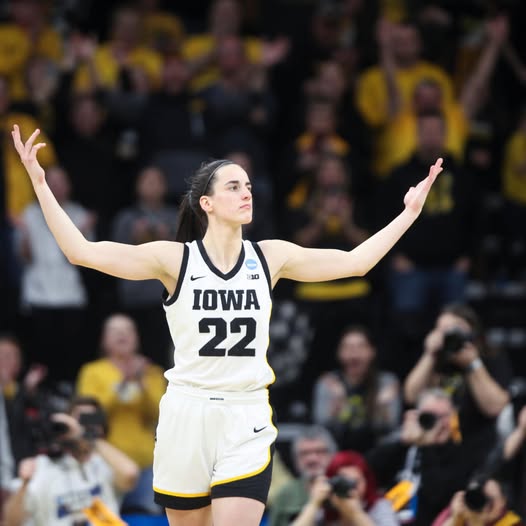
Enter Caitlin Clark.
The first time I heard someone suggest that her popularity had anything to do with her skin color actually kind of outraged me. It felt like this assertion was devaluing her skill (many meant to) and chalked her popularity up to racism or even ignorance.
As an avid follower (and former participant) of womens’ sports, I could say the numbers just don’t lie. She broke so many NCAA records in her 4 years (despite Sheryl Swoopes trying to poison the well on that accomplishment). She led a formerly irrelevant Iowa program to two national championship games.
She did what no man or woman before her has ever done.
The Hawkeyes were the underdogs, the Miracle on Ice, the Hoosiers, that kid from Rookie of the Year, Seabiscuit, the Rockford Peaches, the Average Joes, the Mighty Ducks, America’s team. A bunch of undersized, Midwestern, mostly white girls trying to do something their program had never done before.
The odds were stacked against them and they surpassed expectations time and time again.
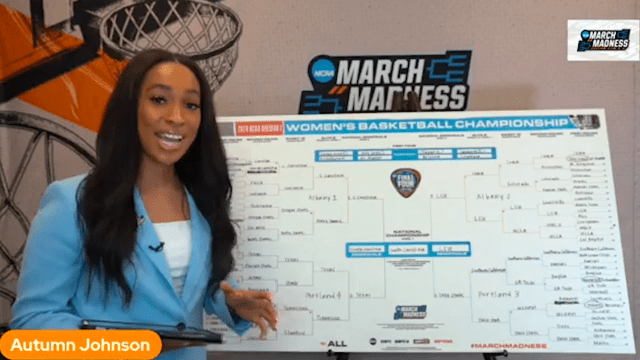
When the Women’s March Madness bracket was announced in 2024 and every single sports analyst picked either LSU or UCLA to win the Albany 2 bracket, it put a fire in my stomach. No one picked the one seed.
Why didn’t they believe in Iowa?
It recently occurred to me that as much as I love basketball and respect women athletes across the board, watching someone who looks like me still makes me “feel good”. This is symbolic representation at work. Watching them succeed makes me feel like maybe I can succeed, too. Watching them do something I didn’t believe could be done makes me reevaluate my notion of what is possible.
My dad put it so well recently when we talked about this. He talked about the 1979 SuperSonics and how they were one of the best basketball teams of all time. But nobody cared. As he put it, “Their games were aired late at night on a tape delay”.
The Seattle SuperSonics had ‘Downtown Freddy Brown’, a former Iowa Hawkeye. And nobody cared.
Let me repeat this: the NBA Finals were played late at night on tape delay because nobody cared and nobody watched.
Then— Bird and Magic entered the league in 1980 and they had “it”. Neither my dad or I have been able to eloquently describe exactly what “it” is, but they had it. Their fandom stemmed from college popularity.
And people started to watch. Demand grew. Games began to air live.
And Caitlin Clark has “it”, too. The perceived rivalry that began when Angel Reese followed Clark around the court pointing to her ring finger in 2023 adds fuel to a much needed fire. Like the WWE, you need the faces and the heels. You NEED a bad guy just as much as you need a good guy, if you want butts in seats and eyes on screens.
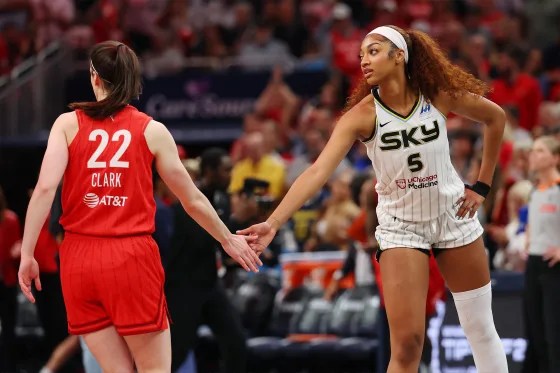
FINALLY — the WNBA has “it”. Clark and Reese played each other a few weeks ago and the WNBA had its most watched game in 25 years. 2.7 million viewers.
A recent study asserted that Caitlin Clark was responsible for 33% of the WNBA’s attendance in 2024. The Fever drew more attendees in their first 6 home games in 2024 than in the previous two years combined. They sell out every road game and most teams have to relocate the game to a larger arena.
Another study asserts that she was responsible for 26.5% of all WNBA economic activity in 2024, amounting to over a billion dollars. In 2024, the Indiana Fever franchise was valued at $90 million. One year later, that valuation has exploded to $340 million.
Naturally, this has drawn the ire of many current and former WNBA players. These talented players have worked hard and feel like they deserve the same attention Clark gets. A’ja Wilson says in this league, “You can be top notch as a black woman, but maybe that’s not something that people want to see”.
And yet, Breanna Stewart is one of the most talented white women that has ever played basketball. She hasn’t had anywhere near the following Clark has. She never blew up in popularity. Because she doesn’t have “it”. She played on a stacked team in college that has won the title more times than I can count. She won it four times herself. This Goliath story does not make for enthralling television.
Almost all the WNBA greats went to UConn and Tennessee. A few others went to USC. And more recently, South Carolina has been a women’s college basketball powerhouse.
For the Midwest (the home of Hoosiers and the birthplace of women’s 6 on 6 basketball), we haven’t seen representation on a national level, ever. For most of my life, if you were a great ball player from the Midwest, there was an implicit understanding that you would need to leave home to be on a great team.
If you wanted any shot of playing in a national title game, you couldn’t play at Iowa.
And it took until I was 31 years old for that narrative to change. It’s a narrative I never believed could or would change. As a naturally competitive person, Clark’s success makes me feel like Iowa and the Midwest is finally getting a W. It is this kind of psychology that explains why her fans are so excited, so loyal, and so eager to see what her future brings.
We feel that we have a personal stake in her success. When she wins, we win.
When I see Caitlin Clark, I see someone who looks like me. I see someone who is from where I am from. I see someone who answers leading questions from reporters with wisdom and class. She refuses to feed the race baiting narrative and she often steers the conversation towards the accomplishments of her teammates.

When I see CC, I see who I wish I could be in that situation or who I imagine I would be if I had the talent. She is able to separate the personal from the professional and it’s a true gift.
I see someone who is not afraid to shine. I see someone who wants her teammates to work as hard as she does. I see someone representing a demographic that is statistically underrepresented in her league.
I guess she’s my perfect storm of symbolic representation. And for millions of people across the country and across the world, I think they feel the same way.

The same gals who talk about how incredibly important it is to see women who look like them represented on screen do not see the irony of being frustrated with white folks for feeling the same way. The same ESPN host who says Clark’s popularity shows no matter “how far we believe we have advanced society, there is still such a long way to go” conveniently ignores that there are multiple American sports leagues that have predominantly black athletes— because athletics are merit based.
Of the top 15 selling jerseys in the NBA, 1 is a white guy, and he’s from Slovenia.
This isn’t a race war. I see color and you see color and when we say we “don’t see color”, what we are saying is we judge by the content of character and not the color of skin.
All I know is that a league who hasn’t had “it” since its inception finally does. I’m loving the ride and I encourage everyone I know to watch these games. I love watching Caitlin Clark and Aaliyah Boston and Kate Martin and A’ja Wilson and Arike Ogunbowale and Sophie Cunningham and Kelsey Mitchell and Kelsey Plum and Erica Wheeler and Jackie Young and Lexie Hull and Ariel Atkins and Lucy Olsen and DeWanna Bonner and Cameron Brink and Kamilla Cardoso and Temi Fagbenle and the list goes on and on.
So watch the game, buy the league pass, buy the jersey, buy a ticket, and don’t be afraid to be an unabashed fan of a league teeming with talent. (There is no A in teem.)
A rising tide lifts all boats.
Last year, Diana Taurasi talked about how reality is coming. She warned of a tougher league than anything the NCAA could provide (we’ve witnessed that). Last year, Clark recorded the first ever triple double by a rookie in WNBA history (she did it twice). This year, she recorded the first ever triple double on Opening Day. I’m certain it won’t be her last.
Reality is here: people are watching and enjoying and appreciating women’s sports. Many gals before Caitlin paved this road for her; she’s putting a topcoat of gold on.
White, black, red, blue, yellow— whatever your team’s colors are— ride for them. Leave the race baiting to the talking heads desperate for views and applause. Leave the vitriol for the team who finishes as runner-up and uses it as fuel for next year. Leave the low blows unsaid. Lead with grace & class.
And don’t be afraid of a little Fever.
 New World, Old Soul
Leave a comment